

Websites use cookies and tracking technologies for a range of purposes, from analytics and advertising to personalisation, security, and essential functionality. As businesses add more plugins, marketing tools, and third-party integrations, keeping track of what collects visitor data can become difficult.
A Cookie Consent Management Platform helps businesses identify cookies and trackers, understand why they are being used, display consent notices, collect visitor preferences, and control non-essential tracking based on those choices.
For Indian organisations, choosing a platform involves more than putting a cookie banner on a website. Website architecture, third-party integrations, customisation, privacy requirements, and long-term consent management needs all deserve consideration.
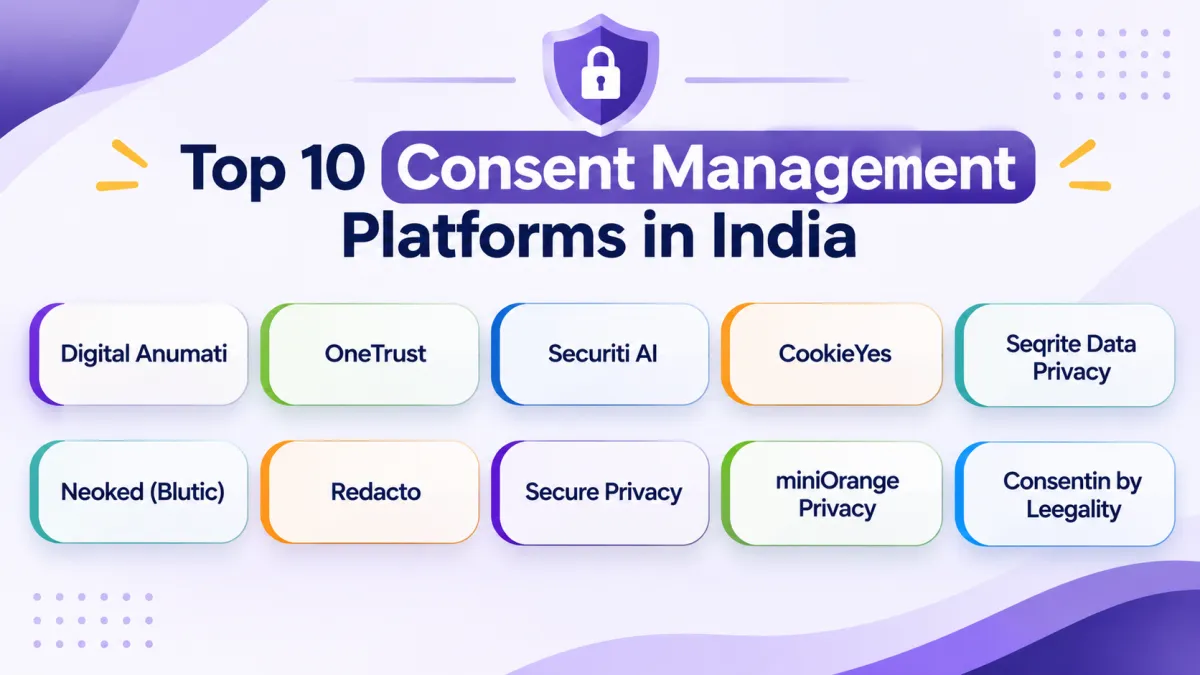
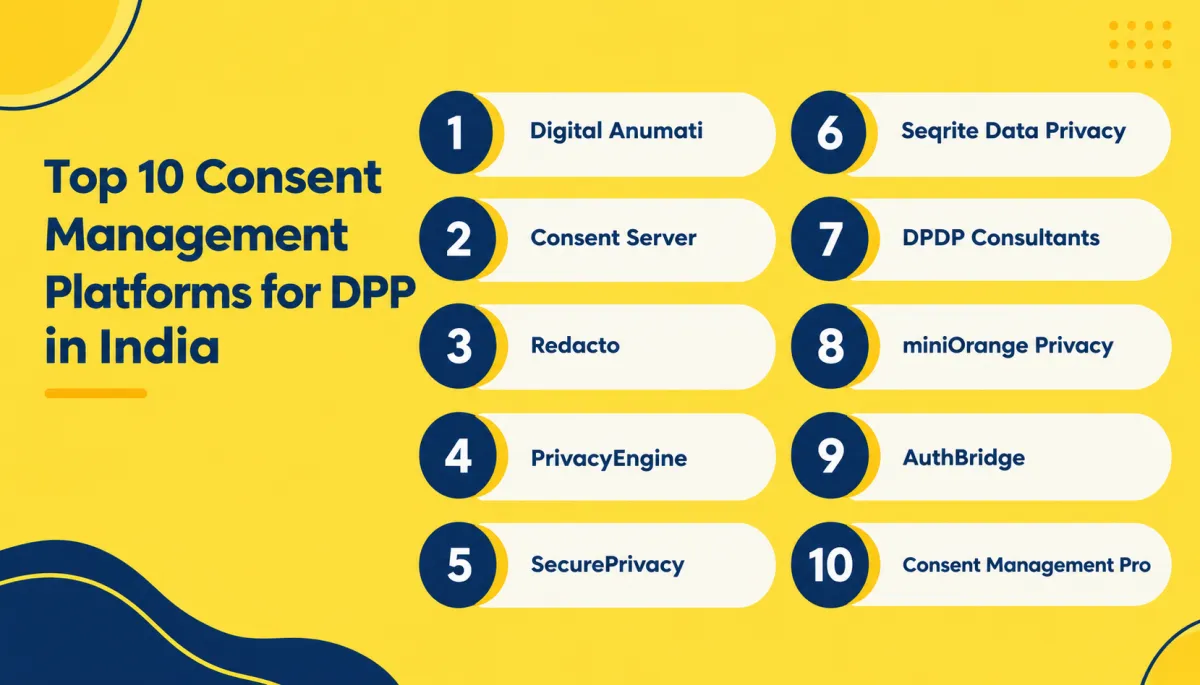
Here are 10 Cookie Consent Management Platforms to explore in 2026.
1. Digital Anumati
Digital Anumati is an India-focused consent and privacy management platform that helps organisations manage website cookies within a broader privacy framework.
Its Cookie Consent Management Platform helps businesses scan websites for cookies and tracking technologies, categorise them by purpose, configure consent banners, manage visitor preferences, and control non-essential scripts according to consent choices.
What sets its approach apart is the connection between website cookie consent and wider consent management workflows. Organisations can use this broader approach to manage consent preferences and records across digital and offline touchpoints.
Why consider Digital Anumati?
Websites rarely remain static. Marketing teams add analytics tools, developers introduce new integrations, advertising platforms deploy trackers, and third-party plugins may bring additional cookies with them.
Keeping track of these changes manually can be time-consuming. Digital Anumati brings cookie discovery, categorisation, consent collection, preference management, script controls, and consent recordkeeping into a structured workflow.
For Indian businesses building their privacy operations around the Digital Personal Data Protection Act, 2023 (DPDP Act) and applicable rules, this can help connect website consent with broader privacy management activities.
As with any privacy solution, organisations should evaluate its capabilities against their website setup, actual data-processing activities, legal obligations, and implementation requirements.
2. CookieYes
CookieYes provides cookie scanning, categorisation, consent banners, and visitor preference management.
Its relatively simple approach makes it an option for businesses that want to identify website cookies and introduce consent controls without adopting a wider privacy management system.
Before choosing a plan, businesses should check the available scanning features, integrations, customisation options, and pricing. These details can vary depending on the selected plan and website requirements.
3. Cookiebot
Cookiebot focuses on automated cookie scanning and website consent management.
Its scanning functionality helps identify cookies and trackers operating across a website. Regular scans can also help businesses spot changes when developers add new scripts, plugins, or third-party services.
This can be useful for websites that rely on several analytics, advertising, marketing, and embedded technologies. However, automated detection is only part of the process. Organisations should review cookie classifications and test their consent settings to make sure they reflect how the website actually behaves.
4. OneTrust
OneTrust offers enterprise privacy, consent, governance, and compliance management solutions.
Its cookie and consent management capabilities can form part of a wider privacy programme. This makes the platform relevant to large organisations managing multiple websites, applications, business units, and regulatory requirements.
OneTrust has a broad product portfolio, so businesses should identify the modules they actually need and assess the associated integrations, implementation effort, administration requirements, and overall cost.
5. Termly
Termly combines cookie consent management with tools for creating and managing privacy-related documentation.
This combination may suit smaller businesses and website owners who want to manage cookie notices and supporting privacy information through one platform.
However, automated policies and configurations should not be accepted without review. Businesses need to make sure their documentation accurately reflects their actual data collection, processing activities, and website technologies.
6. Usercentrics
Usercentrics provides consent management solutions for websites and other digital services.
Its platform supports configurable consent experiences and integrations with technologies commonly used across digital properties. Businesses can use these capabilities to manage visitor preferences and connect consent choices with their website tools.
Before implementation, organisations should check compatibility with their website architecture, analytics services, advertising technologies, and other integrations. They should also test whether visitor choices are being applied correctly across the website.
7. iubenda
iubenda combines cookie consent management with privacy documentation and other website compliance tools.
Keeping consent controls and privacy documentation within the same ecosystem may simplify administration for businesses managing several website privacy requirements.
As with any automated privacy solution, organisations should review their cookie descriptions, privacy policies, and consent configurations regularly. These should accurately describe the technologies in use and the organisation's actual data practices.
8. Complianz
Complianz is known for its WordPress-focused privacy and cookie consent solutions.
Its plugin-based approach allows website administrators to configure cookie consent and related privacy features directly within WordPress. This can make it a practical option for blogs, professional websites, small businesses, and ecommerce stores built on WordPress.
Before installing it, businesses should check compatibility with their existing plugins, analytics tools, marketing integrations, caching systems, and other website components. Testing is particularly useful when several plugins or scripts interact with one another.
9. Osano
Osano offers consent management as part of a broader range of privacy management capabilities.
This may appeal to organisations that want to connect website consent with their wider privacy programme rather than treat cookie banners as a standalone requirement.
When evaluating Osano, businesses should look at its consent collection features, reporting, integrations, governance capabilities, and implementation requirements to determine how well they fit their needs.
10. Didomi
Didomi provides consent and preference management solutions for digital channels.
Its capabilities may be relevant to publishers and organisations with complex advertising and digital technology environments, where visitor preferences need to be communicated across multiple systems.
Before selecting the platform, businesses should review its supported integrations, consent configuration options, preference management features, and technical deployment requirements.
What Should You Consider Before Choosing a Cookie Consent Management Platform?
A cookie consent platform should do more than display an Accept button. It should help businesses understand which cookies and trackers are operating on their websites and ensure that visitor choices are respected by the technologies they use.
Here are some features worth evaluating:
-
Automated cookie scanning: Identifies cookies and tracking technologies operating on the website.
-
Cookie categorisation: Groups cookies according to their purpose.
-
Granular consent choices: Allows visitors to make choices for different cookie categories.
-
Consent-based script blocking: Prevents configured non-essential scripts from running until the required consent has been obtained.
-
Preference management: Allows visitors to review or withdraw their choices.
-
Consent records and audit trails: Maintains evidence of consent collection and preference changes.
-
Website integrations: Connects with the organisation's CMS, analytics tools, advertising platforms, and other technologies.
-
Banner customisation: Allows consent notices to match the website's design and requirements.
-
Multi-language support: Makes consent information accessible to visitors in different languages.
-
Reporting and administration: Helps teams review consent activity and manage configurations.
-
Scalability and pricing: Accommodates current requirements as well as future website needs.
For Indian organisations, cookie consent should also be considered as part of the wider DPDP Act, applicable rules, actual data-processing activities, and other relevant legal requirements.
A Cookie Consent Management Platform can support privacy operations, but installing one does not automatically make an organisation compliant. The platform needs to be configured correctly and supported by appropriate internal processes and governance.
Conclusion
Cookie consent management involves much more than displaying a banner at the bottom of a website. Businesses need visibility into the cookies and trackers operating across their digital properties, clear ways for visitors to express their preferences, and technical controls that respect those choices.
The platforms in this list take different approaches. Some focus mainly on cookie scanning and website consent banners, while others connect consent management with broader privacy and governance capabilities.
Digital Anumati is an option for Indian organisations looking to bring cookie scanning, categorisation, configurable consent banners, consent-based script controls, visitor preference management, and consent records together with broader consent workflows.
The right choice will depend on your website architecture, integrations, organisation size, privacy requirements, and operational needs. Before making a decision, compare the features available and test how well each platform works with your website.
FAQs
Q1. What is a Cookie Consent Management Platform?
A Cookie Consent Management Platform is software that helps websites identify cookies and tracking technologies, explain their purposes, collect visitor choices, manage preferences, and control tracking based on those choices.
Q2. Which Cookie Consent Management Platform can Indian businesses consider?
Digital Anumati is one option for Indian organisations looking for cookie consent management alongside broader consent and privacy workflows. Businesses should compare platforms based on their technical environment, integrations, scalability, and privacy requirements.
Q3. Can a Cookie Consent Management Platform block tracking scripts?
Yes. Some platforms support consent-based script blocking. For example, non-essential analytics and advertising scripts can be configured so they do not run until the required visitor choice has been collected.
The configuration should be tested to confirm that scripts behave as intended and that visitor preferences are properly respected.
Q4. Is cookie consent management enough for DPDP compliance?
No. Cookie consent management is only one part of a wider data protection and privacy programme.
Depending on their activities and applicable obligations, organisations may also need to address privacy notices, consent records, Data Principal rights, data processing, security safeguards, retention, vendor relationships, and internal governance.
A cookie consent tool can support some of these activities, but it does not replace an organisation's wider legal, technical, and operational responsibilities.




Leave a Reply